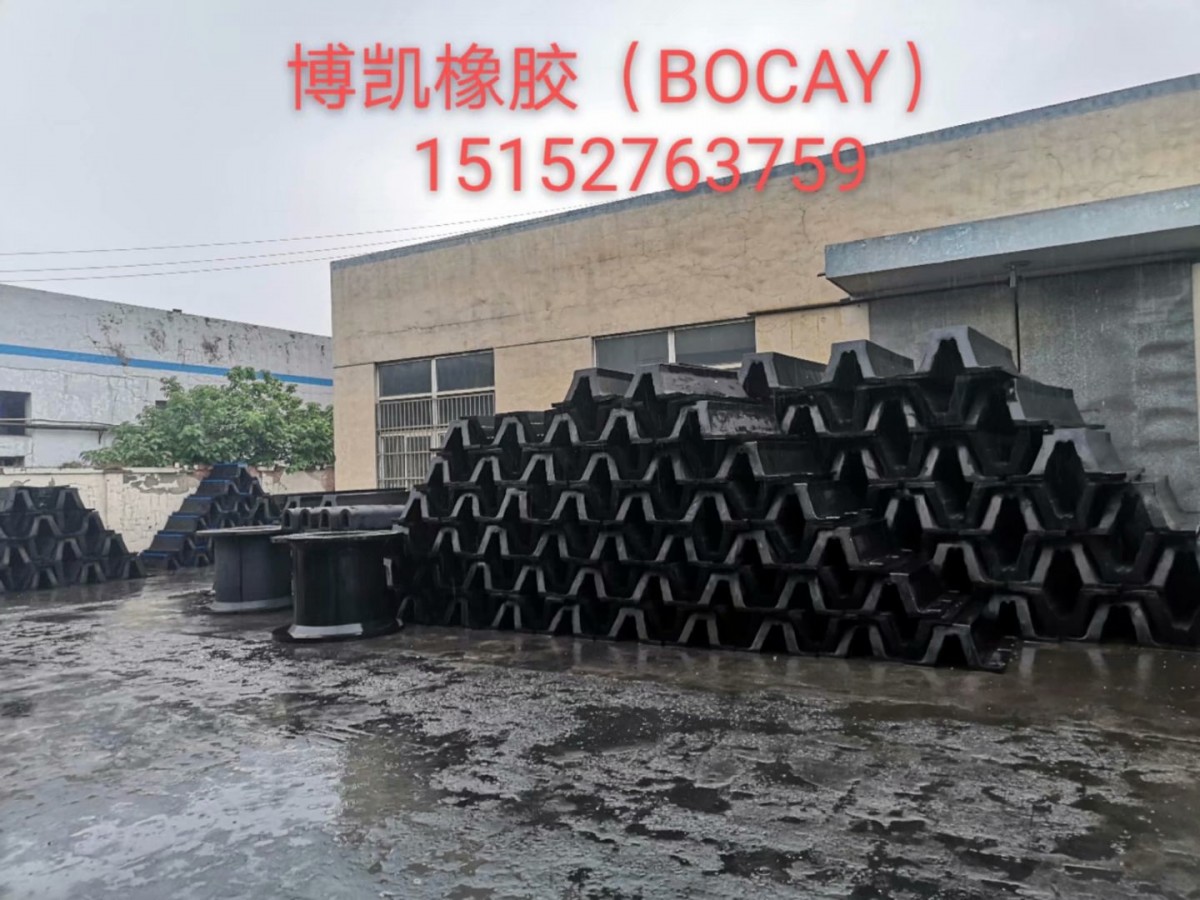

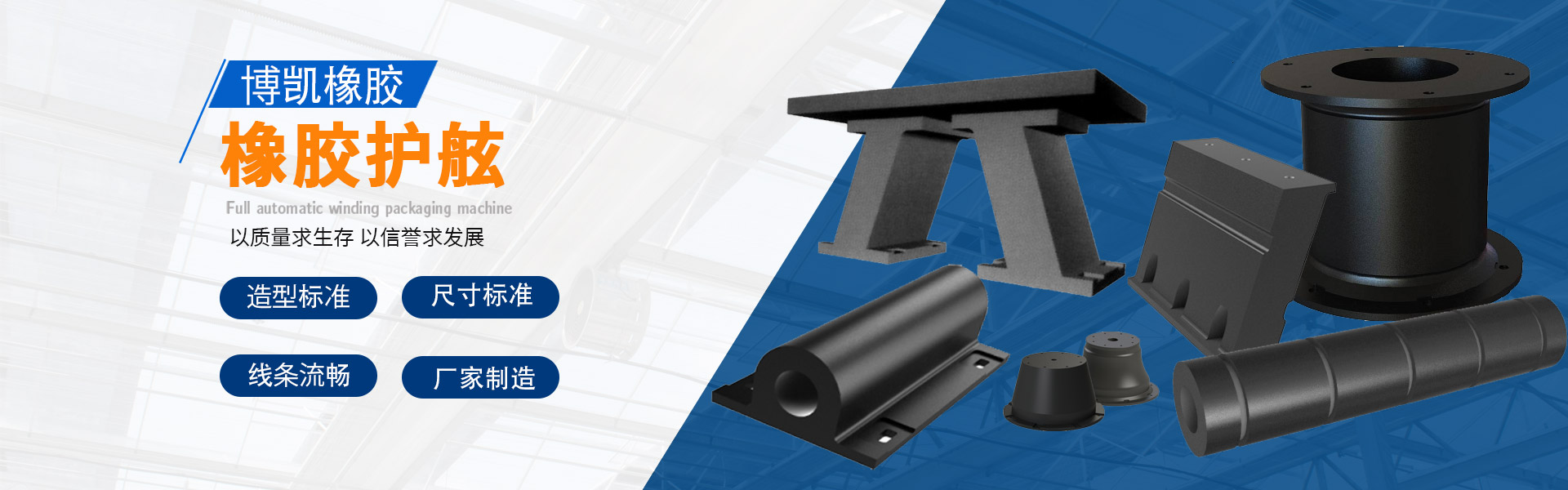


Rubber fenders, also known as rubber fender boards, are installed on docks or vessels to absorb the collision energy between ships and docks or between ships during docking or mooring, thereby protecting both the vessels and docks from damage.
Rubber fender structures are typically divided into two main categories: solid rubber fenders (non-floating) and floating rubber fenders.
Solid rubber fender (non-floating type) is an early-applied and widely-used collision avoidance equipment for docked ships. It can be categorized into shear type, rotational type, and compression type based on the load-bearing conditions of the fender. According to the structure of the fender, solid rubber fenders can be further classified into D-type, cone-shaped, drum-shaped, fan-shaped, rectangular, cylindrical fenders, and so on.
Buoyant rubber fender can freely float on the water surface and is classified into two types based on the different internal cushioning media: inflatable rubber fender and filled rubber fender.
The inflatable rubber fender utilizes compressed air as a medium, dissipating collision energy through the work done by the compressed air.
Foam-filled fender, also known as solid polyurethane fender, features a cushioning medium primarily composed of closed-cell foam materials, such as foamed EVA, foamed polyurethane, and foamed rubber, among others.
Features and Applications
Editor
Solid rubber fender has high energy absorption and reaction force, with the advantages of low cost, long service life, and simple installation and maintenance. It is a common protective device for docks and shipyards.
The floating rubber fender is a relatively new type of fender equipment, with the following main characteristics when compared to solid rubber fenders: high compressive deformation, large energy absorption, low reaction force, self-floating, and easy installation. It is commonly used in ship-to-ship, ship-to-wharf cargo operations, and docking. Due to its self-floating nature, it is particularly suitable for installations at wharfs with significant tidal fluctuations. The filled rubber fender, with its benefits such as low maintenance and long service life, is especially suitable for use in harsh environments, such as offshore drilling platforms.
Standard
Editor
The industry standards for solid rubber fender are "HG/T 2866-2016 Rubber Fender" and "GB/T 21537-2008 Conical Rubber Fender."
The domestic industry standard for inflatable rubber fender in China is the "CB-T 3948 Shipboard Inflatable Rubber Fender" and the international ISO standard ISO 17357:2002 "High Pressure Floating Pneumatic Rubber Fenders." The filled floating rubber fender is a new product, and there are no international or industry standards for it.