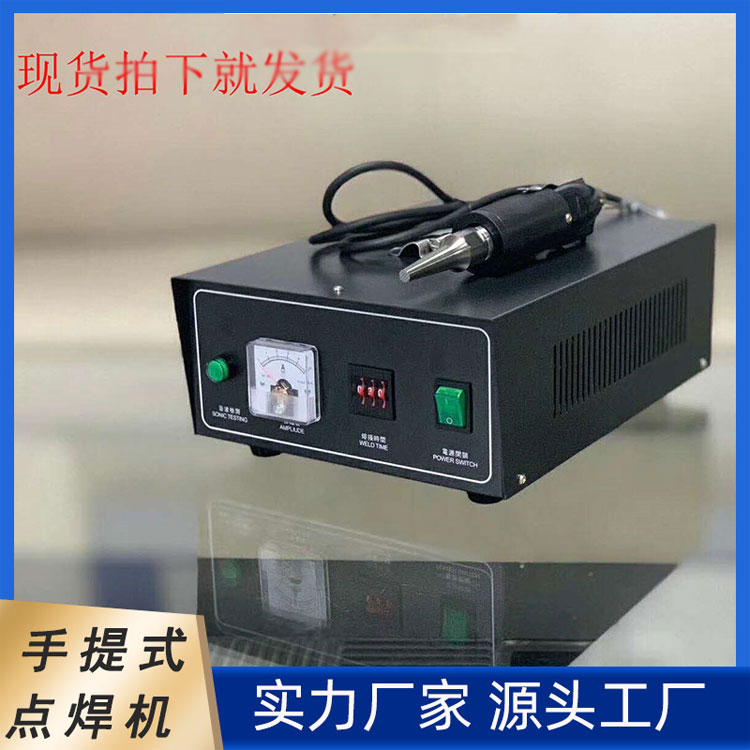





The principle of ultrasonic plastic welding involves the generation of high-voltage, high-frequency signals by a generator, which are then converted into high-frequency mechanical vibrations through a transducer system, applied to plastic parts for welding.
The temperature at the interface increases due to friction on the workpiece surface and between molecules. When the temperature reaches the melting point of the workpiece itself, the interface of the workpiece melts rapidly, then fills the gaps between the interfaces. When the vibration stops, the workpiece cools and sets under a certain pressure, achieving a perfect weld.
Welding by Fusion
1. Welding method
The welding tip, vibrating at ultra-high frequencies via ultrasonic technology, fuses the mating surfaces of two plastic pieces under moderate pressure, generating friction heat for instant melting and bonding. The welding strength is comparable to the base material. With appropriate workpieces and rational interface design, it achieves water-tight and airtight seals, eliminating the inconvenience of auxiliary materials, and achieving a clean melt joint.
2. Riveting and welding method
The ultrasonic welding head, vibrating at ultra-high frequencies, presses against the protruding tip of the plastic product, causing it to heat up and melt instantly into the shape of a rivet, mechanically bonding materials of different materials together.
3. Implant
With the guidance of the welding head and appropriate pressure, metal parts (such as nuts, bolts, etc.) are instantly pressed into pre-drilled plastic holes, fixed at a certain depth. Once completed, both tensile and torque strength can match that of traditionally molded parts, eliminating the drawbacks of mold damage and slow injection.
Ultrasonic welding machines are primarily used for secondary bonding of thermoplastic materials. Compared to other traditional processes (such as adhesive bonding, hot pressing, or screw fastening), they offer significant advantages, including high production efficiency, excellent welding quality, environmental friendliness, and energy savings.
Ultrasonic plastic welding equipment is widely used in industries such as medical devices, packaging, automotive parts, and fishing gear, including the welding of disposable infusion filters and plasma separation cups, self-sealing bags, plastic wine bottle caps, dishwasher water wheels, plastic toys, car lights, plastic artificial lures, charger casings, and mobile phone straps.