
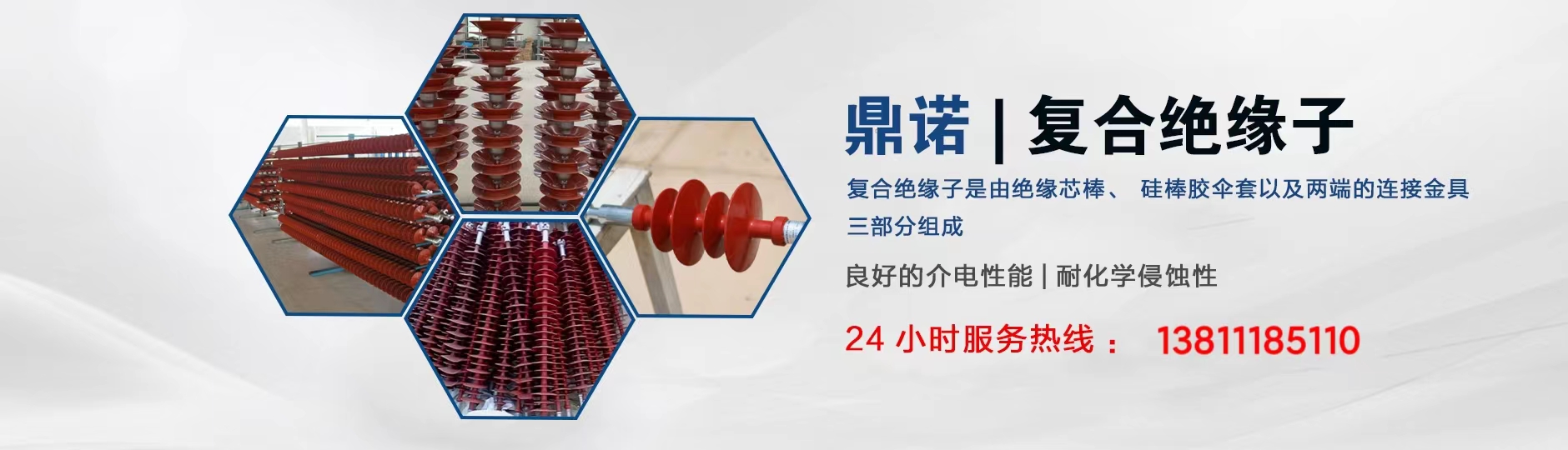

Domestic overhead transmission lines commonly employ the following three types of insulators: porcelain disk insulators, tempered glass disk insulators, and rod-type composite insulators.
Western countries such as Germany, Japan, and the United States still use unpenetrable structures, deep skirted, and medium to large climbing distance rod-type porcelain insulators. These are now being produced domestically and are in use on some of our 500kV lines. Additionally, a new composite anti-pollution disk-type suspended insulator has been independently developed and is currently in operation on our 500kV lines.
1.1 Disc-shaped porcelain insulator
Currently, porcelain insulators remain the most widely used insulators in the power system. Ultra-high voltage insulators made of high-strength porcelain are composed of quartz, feldspar, clay, and alumina through calcination. The porcelain's internal structure is a composite of crystalline phases, a small amount of pores, and uneven glass phases. The physical and chemical properties of the porcelain are primarily determined by the types and quantities of the crystalline and glass phases that make up its microstructure. Finer particles result in stronger interparticle bonding, forming a uniform porcelain medium with high mechanical strength and stable performance. However, finer particles also mean increased difficulty in drying, shaping, and sintering processes. Porcelain is a brittle material with much higher compressive strength than tensile strength. To achieve a high mechanical strength in electrical porcelain, the design should aim to subject the porcelain to compressive stress as much as possible. The surface of porcelain components is typically covered with porcelain glaze to enhance mechanical strength, prevent water penetration, and increase surface smoothness. To improve the porcelain insulator's resistance to pollution flashover, an insulator coated with semiconductor glaze has also been developed. As the leakage current on the insulator surface increases, the glaze heats up, causing surface moisture to evaporate, thereby preventing the formation and development of surface local arcs and遏制ing pollution flashover.
Disc-shaped porcelain insulators offer excellent insulation properties, climate resistance, heat resistance, and flexibility in assembly, making them widely used in various voltage transmission lines. Disc-shaped porcelain insulators are of the breakdown type; as operating time increases, their insulation performance gradually diminishes, a phenomenon commonly referred to as the "aging" of porcelain insulators. This issue is particularly prominent when the porcelain formulation is incomplete, the structural design is not optimized to the fullest, and production process control is not stringent. Currently, the average annual aging rate of domestically produced porcelain insulators is less than 0.005%.
One significant advantage of porcelain insulators is that they can be designed with a smooth, double-umbrella or triple-umbrella shape beneath the canopy when anti-fouling products are required. This design, thanks to its excellent aerodynamic properties, is highly beneficial for self-cleaning under windy conditions, with a low rate of dirt accumulation, effectively enhancing anti-fouling capabilities. It is particularly suitable for environments prone to dust, dryness, and infrequent rainfall.
