
 Shaoyang Ancestral Hall Construction, Xin Shaoyang Ancestral Hall Design, Longhui Temple Design
 Ancient Architectural Temple Design and Construction
 Antique Aluminum Components, Ancient Architecture Aluminum Components, Aluminum Ancient Building Components, Chinese Aluminum Alloy Ancient Architecture Components
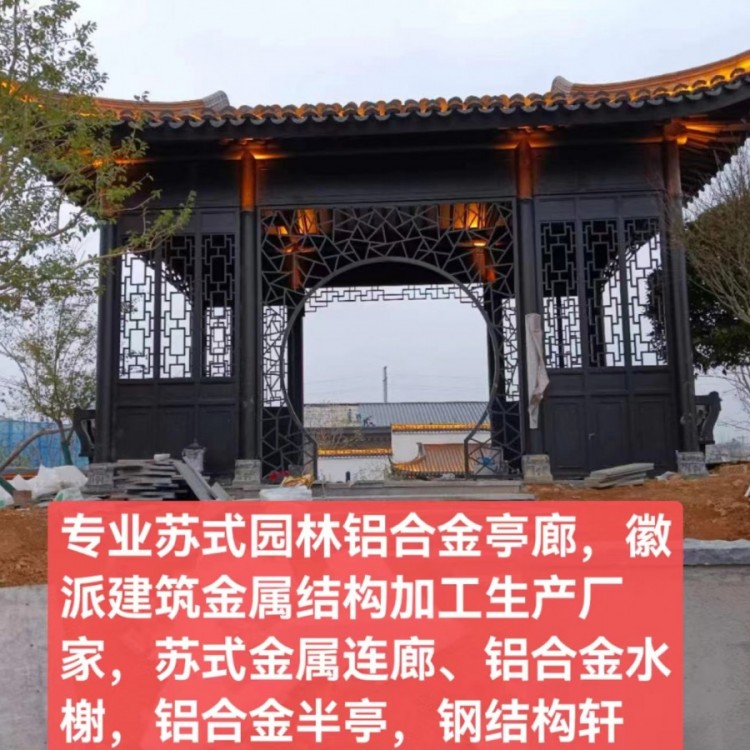 Traditional Chinese Villa Design, Aluminum Substitute Wood Design, Villa Effect Sketch Design
Product Details

Aluminum alloy corridors, aluminum alloy dougong (arched brackets), metal dou...



产品Price 25536.00/Piece
最小起订Quantity:1 Piece 供货总Quantity: 10000 Piece


 Aluminum alloy dougong, Dougong manufacturer, Aluminum plate dougong, Ancient architecture dougong, Stainless steel dougong
¥986.00
Aluminum alloy dougong, Dougong manufacturer, Aluminum plate dougong, Ancient architecture dougong, Stainless steel dougong
¥986.00
 Wooden bracket arches, wood carved bracket arches, antique architectural bracket arches
¥2800.00
Wooden bracket arches, wood carved bracket arches, antique architectural bracket arches
¥2800.00
 Hunan Ancestral Temple Design and Construction, Hengyang Ancestral Temple Construction, Hengnan Ancient Architecture Construction
¥3428.00
Hunan Ancestral Temple Design and Construction, Hengyang Ancestral Temple Construction, Hengnan Ancient Architecture Construction
¥3428.00
Minnan Ancestral Hall Design, Hakka Ancestral Hall Design and Construction, Ancestral Hall Design Plans The layout of Minnan ancestral halls varies due to terrain and land restrictions, featuring various architectural styles. Most halls range from 10 to 20 rooms, with some larger ones having dozens. They are typically composed of solemn halls. Most halls include tall gates, pavilions, screens, main halls, side rooms, and ancestral halls, with side rooms on the sides of the main hall. The regional characteristics of the roofs in Minnan traditional architecture are that hard-sloped roofs are common in Minnan residential buildings, while suspended roofs are more prevalent in the mountainous areas of Minnan. The歇山顶 originated in southern China and is widely used in the tails of temples and monasteries in Minnan. The Wenzhou Great Hall in Quanzhou is the only example of a hall with a Wutie roof. The Qingyao porcelain jar unearthed in Luchou, Xiamen, bears architectural images from the Southern Song Dynasty, featuring a five-eave hall roof, which is a unique example. The longitudinal depth and horizontal rows vary with the hall's specifications, the builder's wealth, and the land scale, mainly including the following types: (One) Single-Archway, Single-Room Ancestral Temples: These are ancestral temples composed of a single building (such as a hall of merit), such as the Temple of Liu Mengjiang, Wang Fei, and Lu Yu. These temples are fewer in number and represent a simple style of ancestral temple. (II) Two-section Ancestral Hall: Refers to an ancestral hall composed of the ancestral gate and the hall of sacrifice, which may be connected by side wings or corridors, resembling a residential courtyard. Sometimes, a separate courtyard for the ancestral hall's staff is located on the side, as seen in the Tao Zhongcheng Ancestral Hall and the Zhou Dunyi Ancestral Hall. This is one of the main patterns of the ancestral halls in Huizhen Town.
(III) Three-section Ancestral Hall: Comprises the ancestral gate, hall of sacrifice, and sleeping hall (or rear pavilion), or the ancestral gate, second gate (also known as the ceremonial gate, which may have a hall of sacrifice with a stage in the rear), and the hall of sacrifice. The side wings may also have separate courtyards for the ancestral hall's staff. The rooftops of Minnan ancestral halls are the most striking feature, known as the "beautiful crown." The roof forms of Minnan traditional architecture follow the Chinese traditional architectural culture and also possess distinct regional characteristics, blending and absorbing various elements to present a diverse appearance. Their elegant lines, intricate decorations, and complex craftsmanship represent the typical forms of Minnan traditional architecture rooftops. The design and construction of Hakka ancestral halls reveal the migration and evolution of a lineage through the hall names, couplets, door plaques, and inscriptions left behind. Delving into a single ancestral hall can reveal countless stories and historical events. There is a profound cultural heritage here that deserves to be thoroughly explored. Moreover, as a carrier of culture, the buildings must be well-protected. Renovations should not be too jarring, for instance, the glazed tiles of the Li ancestral hall were quite dazzling; they should be replaced with small grey tiles. The ancestral hall's CAD design shows, upon entering through the main gate, the double doors adorned with a bull's head and bat wood carvings above. The bull's head is revered by the people of Xiangxi as a charm against evil and for protection of peace; the bat symbolizes good fortune and auspiciousness. Inside the hall, it is clearly a typical Siheyuan structure, with wooden construction, two stories, consisting of the main gate, stage, antechamber, corridor, and main hall. The guide mentioned that it covers an area of 770 square meters. The stage faces the main hall, with a single-eave upturned roof, decorated with lucky cloud corbels below, standing at 16 meters high, with four columns carved with dragons and phoenixes. It is said that all the Yangs in the Phoenix City are descendants of the loyal and heroic Yang family of the Great Song Dynasty, hence the central painting on the stage is a vivid "Yang Mother Teaching Her Son," inscribed with the strong characters "Terrifying the Three Passes." There are two side doors for actors to enter and exit, labeled "General Out" and "Minister In," showcasing the pride of the Yang family in "outside being a general, inside being a minister." The sides of the stage have dressing rooms and backstage areas for performers to prepare and rest.


