

Anionic flocculants (with a negative charge) and cationic flocculants (with a positive charge) are used for different purposes due to their differing electrical charges. Anionic flocculants are suitable for treating suspended particles with high concentration and positively charged particles in water.Wastewaters with neutral or alkaline pH levels, such as steel mill effluent, electroplating plant effluent, metallurgical wastewater, coal washing wastewater, etc. Cations are used in the treatment of urban wastewater, chemical industry, dyeing and printing, slaughterhouses, and other wastewater containing organic matter.
Anionic flocculants typically contain negatively charged groups after hydrolysis, such as -COOH, which have a strong hydrolysis degree. Many SS (suspended solids) materials have charged surfaces, and it is obvious that flocculants with the same charge can utilize the principle of opposite charges attracting to flocculate SS materials. This aids in the sedimentation of impurities in wastewater and is also known as a flocculation sedimentation agent. Similar substances are called anionic polyacrylamide or APAM.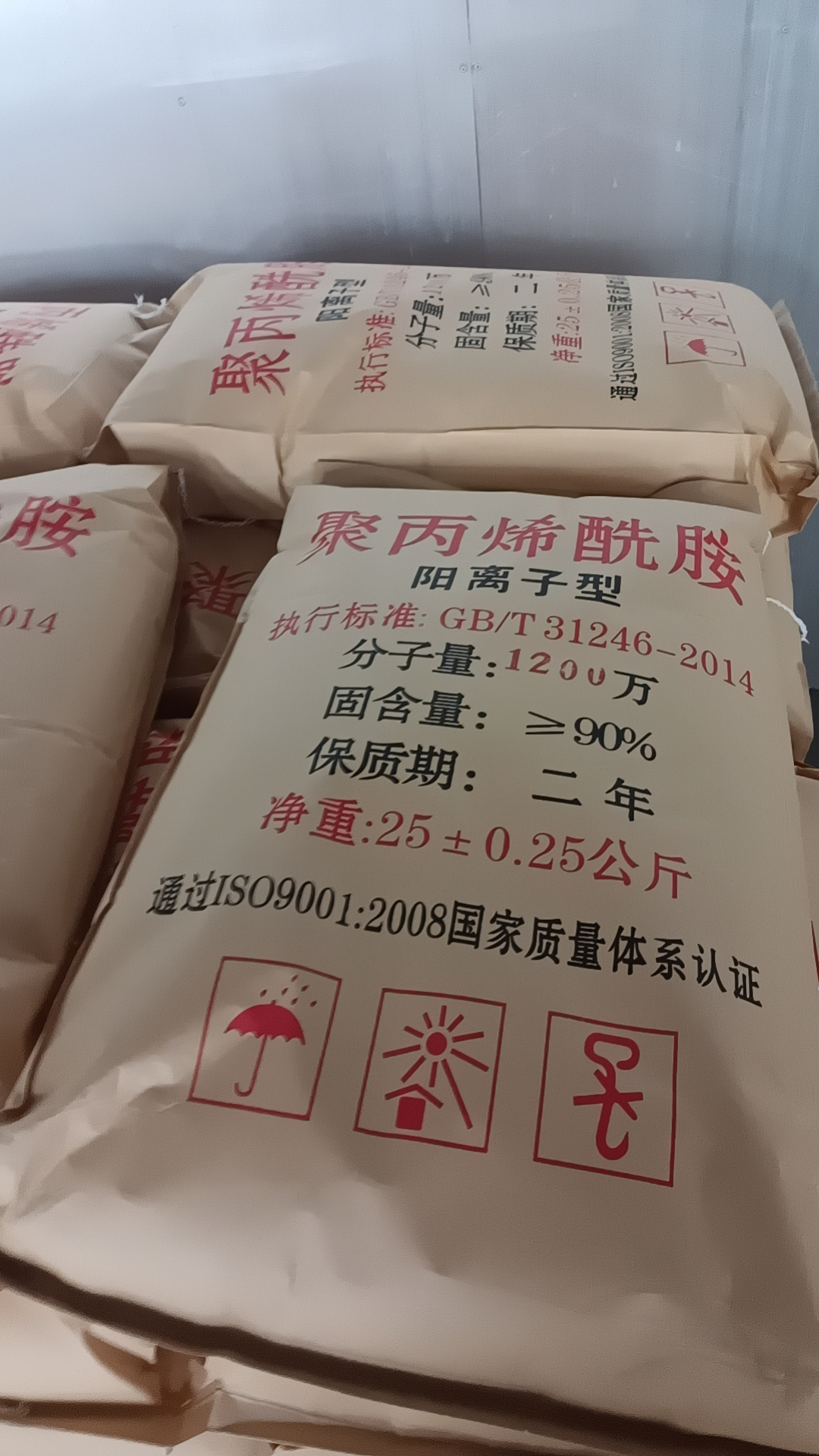
Cationic flocculants can effectively flocculate and sediment wastewater under acidic or alkaline conditions. They are particularly effective in clarifying wastewater containing suspended particles with a negative charge. This includes effluents from grain alcohol production, papermaking, and urban wastewater treatment plants. In addition to using solid cationic flocculants, polyaluminum chloride is also utilized.Wastewater treatment without organics is gaining increasingly widespread application.
Anionic flocculants and cationic flocculants exhibit different ionic charges. Consequently, the ionic charges of the adsorbed and flocculated particles in water bodies or sludge vary, necessitating different flocculant choices. In summary, it is crucial to select flocculants with opposite ionic charges. Therefore, for negatively charged clay-like particles, cationic flocculants are used. If anionic flocculants are employed, an inorganic flocculant must be added beforehand. Generally, cationic flocculants are used for sludge dewatering.PAM selection should be determined based on pilot tests. Some may initially add PAC, followed by the use of anionic and non-ionic PAMs, though this is a minority case. Anionic PAM is generally used for preliminary treatment, often in air flotation or sedimentation processes.
