

Nowadays, various types of polyacrylamide (PAM) are used in water treatment processes. However, among the commonly used PAMs, which combinations are most likely to achieve optimal results? Generally, what is the recommended dosage? Specifically for paper mill wastewater treatment, there are also the newly developed shallow-layer flotation devices. How do we determine the exact dosage for different situations? Are there any general guidelines? These are common questions we encounter when using polyacrylamide.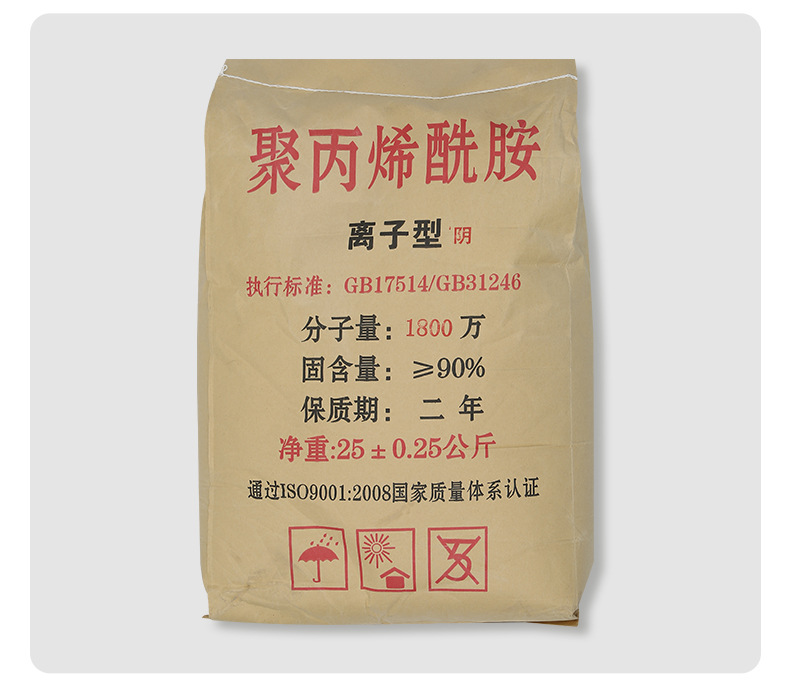
Polyacrylamide, as a flocculant, is typically dosed at a concentration of 0.5% to 1%, with the exact dosage determined based on water quality test results, aiming for the formation of large flocs that are easy to clarify. Polyacrylamide is used to enhance the speed and efficiency of processes such as sedimentation, clarification, filtration, floatation, and centrifugal separation. The flocculation process involves the aggregation of many individual particles in a suspension into clusters (flocs or floc flowers).
Differences in raw water quality, treatment requirements, and facility conditions greatly affect the dosages of PAC (polyaluminum chloride) and PAM (polyacrylamide). Sometimes, the dosage can vary by over 10 times. Adding PAC destabilizes suspended particles in the water, causing them to combine through collisions, surface adsorption, and van der Waals forces, thereby growing larger for easier separation. This achieves coagulation, with typical PAC slurry concentrations ranging from 10-20% and dosages of about 120ml per cubic meter. Adding PAM facilitates rapid sedimentation of flocs through bridging and bonding actions, aiding in coagulation and clarifying the water quality. The dosage of PAM should be determined based on the original water's concentration and composition, generally ranging from 0.1-10PPM. The cost of PAM, based on market prices at 12 yuan per kilogram (molecular weight of 1500-1600), and PAC, with a 28% aluminum oxide content at 2000 yuan per ton, is used to calculate costs.
新闻中心
