

The mine sand washing wastewater treatment process, with water recycling, mainly discusses the rapid sedimentation treatment technology (sludge sedimentation agent) of slurry produced in the mechanism sand and water-washed sand process in the sand washing industry. Sand washing sites consume a significant amount of water, with hourly water usage ranging from a few dozen tons to several hundred tons, depending on the volume of sand washed. Discharging untreated wastewater not only pollutes the environment but also causes river blockages.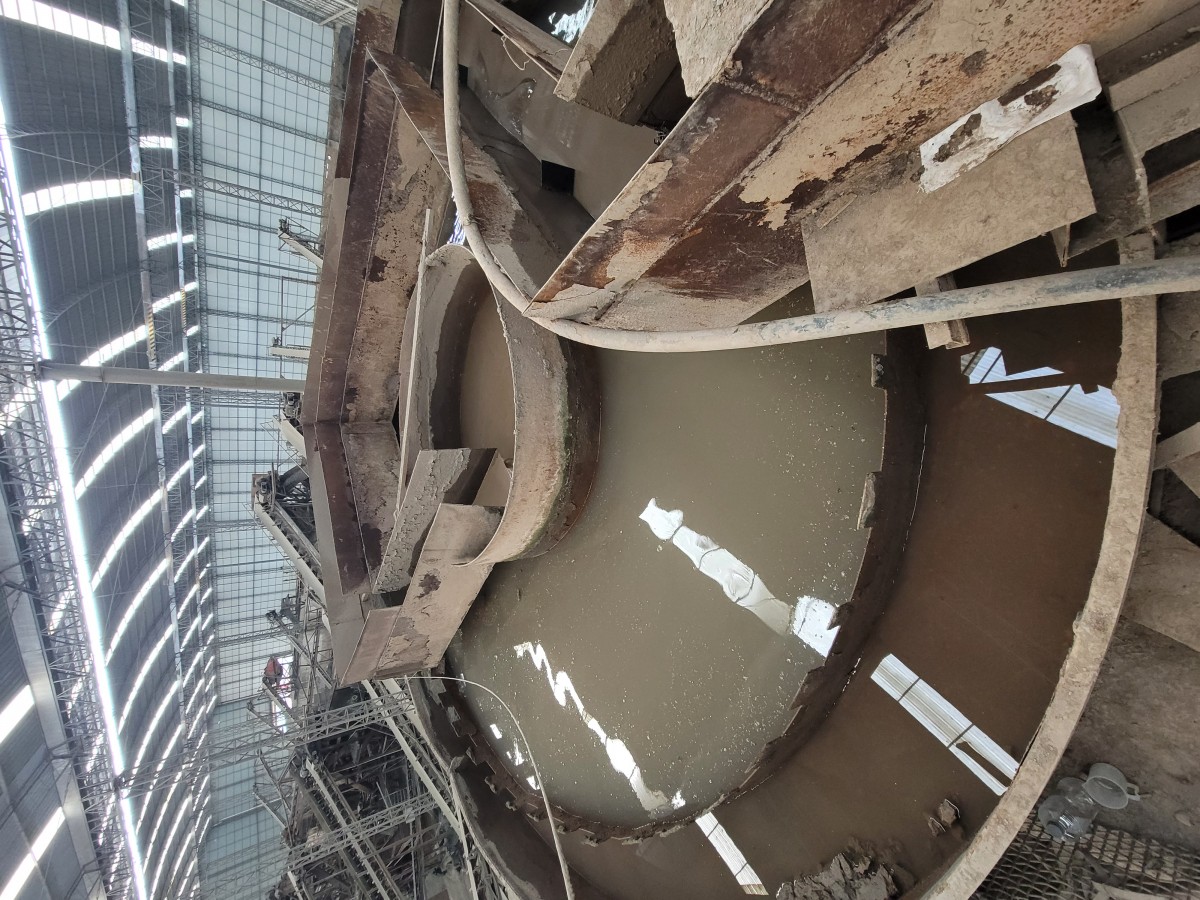
Initially, many sand washing plants primarily employed natural sedimentation methods. This involved constructing several large sedimentation ponds within the sand washing facility to allow mud to settle naturally. Subsequently, the clear water from the ponds was drained, and the settled mud at the bottom of the ponds was excavated. Not only did the construction of sedimentation ponds and manual mud excavation incur substantial costs, but there was also the need for ample space to dispose of the wet mud. The sedimentation mud did not reach a sufficient dryness, making its treatment a challenging task.
Washing sand wastewater is a suspension liquid containing a certain amount of fine mud particles in water. The characteristics of the mud slurry depend on the composition of the sand and stone, as well as the local geological conditions. Generally, the mud slurry appears as deep yellow, earthy yellow, or gray, is uniform and sticky, does not segregate upon long-term rest, has a specific gravity between 1.1 and 1.3, and contains 5% to 40% mud content. The pH value ranges from 3 to 9. By adding a mud settling agent for the treatment of washing sand wastewater, the mud, fine sand, and suspended substances in the wastewater can be flocculated and settled, achieving the standard of clean water. This process shortens the wastewater treatment time and reduces the suspended solids content in the mud slurry from washing sand sites, allowing for recycling and improving the utilization rate of recycled water.
Sludge Sedimenting Agent, as a new process for treating waste sand washing slurry, operates on the principle that the waste from sand washing has large particle sizes and high turbidity. After the sludge sedimenting agent reacts fully with the wastewater, it produces double-charged particles, causing the suspended solids to lose stability and separate from the water. Through molecular chains, the particles coalesce with each other and collide, forming flocs. Generally, these flocs can form and settle into larger clumps within a few seconds, achieving rapid sedimentation. The sedimented sand and mud can then be processed through a pressure filter for easy transportation.
The treatment effectiveness of sand washing slurry wastewater includes絮凝, clarity, and subsequent filtration, which varies based on the type of raw material and water quality. In practical production, to select the appropriate slurry settling agents and the optimal dosage, it is common to take on-site wastewater and add different types of slurry settling agents. When the dosage is the same, the settling of mud and sand, as well as the clarity of the water, are compared. Additionally, slurry settling agents can be adapted for various water-washed sands, manufactured sands, and wastewater treatment in mining operations, thereby preventing environmental pollution due to slurry discharge and benefiting environmental protection.
Sand washing plant sludge wastewater contains larger particle sizes and higher concentrations, making it relatively easier to treat compared to other wastewater. This sand washing sludge can be properly treated using the physical method of concentration and sedimentation, which allows for effective sedimentation. The separated clear water can be reused for sand washing. During use, the water ratio should generally be between 0.1% and 0.3%, and it should be dissolved into a gel-like liquid before being added to the sludge for mixing. This helps to sediment suspended particles in the wastewater. The dosage concentration can be gradually increased from low to high, allowing for observation of the clarity of the sand washing wastewater and the flocculation state of the sediment. In cases of particularly special water quality, the general dosing sequence is to add PAC first, followed by the sludge sedimentation agent solution, as otherwise it may affect the effectiveness. Measures for changing the dosing sequence should be considered in the design of the dosing room.
Here is an introduction to the process and methods of waste water treatment in sand washing from mines. For more information on treatment details, please consult Hongyuan Water Treatment Technology. As a manufacturer of slurry sedimentation agents, Hongyuan is a specialized water treatment company that focuses on product research and development, with rapid innovation and growth. We prioritize product development and after-sales technical services. Our aim, as the Hongyuan Water Treatment Technology Department, has been to assist sand washing manufacturers in planning wastewater treatment process schemes, achieving precise and quantitative improvements in management and operation levels safely and conveniently.
